Installation vs. replacement — what's actually different
The terms installation and replacement are sometimes used interchangeably, but they describe meaningfully different scopes of work. Replacement is swapping an existing unit for a new one at the same location using existing plumbing, gas, or electrical connections — a well-defined job with a predictable scope. Installation is placing a water heater where none has existed before, which means establishing all the infrastructure the unit needs from scratch.
In practice, a true new installation in Philadelphia is most common in four situations: new construction (a house or condo unit being built from the ground up), a home addition that creates a new bathroom or kitchen beyond the reach of the existing water heater, a basement conversion where an unfinished space is being made into livable square footage with plumbing, and a second-unit installation where a homeowner or landlord wants to add a dedicated water heater for a rental unit, accessory dwelling, or specific building zone.
Each of these scenarios requires a site assessment before unit selection. The question isn't just which unit is the right size — it's where the unit will live, how it connects to the cold water supply, where hot water lines run to serve the space, what fuel source serves the location, how combustion gases vent to the exterior (for gas units), and what permits cover all of the above. A technician who has worked on Philadelphia's varied housing stock — from Northern Liberties loft conversions to Northeast Philly new-builds — understands the site-specific variables that determine what's possible and what's practical.
Common installation scenarios in Philadelphia
New construction
The cleanest installation scenario — infrastructure is planned and rough-in work happens before walls close. Unit location, fuel type, venting path, and connection sizing are all specified during the build phase. Coordination with the general contractor and scheduling relative to other trades is the primary complexity.
Home addition
An added bathroom, in-law suite, or expanded kitchen may be too far from the existing water heater for practical hot water delivery. A dedicated unit for the addition — often a compact or tankless model — serves the new space efficiently without overloading the existing system or requiring very long hot water pipe runs.
Basement conversion
Philadelphia's older row homes frequently have unfinished basements being converted to finished living space with full bathrooms. The utility area and water heater location often need to be reconsidered as part of the conversion — what worked in an unfinished basement may not work in a finished one. This is often combined with a tank-to-tankless upgrade to free up square footage.
Second unit / ADU
Landlords adding a rental unit or accessory dwelling unit need a separate water heater for the new unit — both for practical hot water independence and in many cases to allow separate utility metering. Installation in this scenario involves running supply lines from the main stack, establishing a gas or electrical connection, and determining a viable venting path from the new unit's location.
What a new installation requires — infrastructure checklist
Unlike a replacement, where the infrastructure already exists and is simply reconnected, a new installation requires establishing each of the following elements from scratch. Which ones are straightforward and which require additional trade work depends entirely on what exists at the installation site.
Choosing fuel type for a new installation
When infrastructure doesn't already exist, there is a genuine choice to make about fuel source. The decision is less about which technology is objectively better and more about what makes sense for the specific building, the location of the installation, and the household's long-term plans.
Gas (natural gas or propane)
Gas remains the most common choice for Philadelphia residential water heaters, primarily because Philadelphia Gas Works (PGW) serves most of the city with natural gas infrastructure that most existing homes already connect to. Gas heaters heat water quickly, maintain temperature efficiently, and continue to function during electrical outages (pilot ignition models). The main installation consideration is gas line routing — whether the supply at the installation location has sufficient capacity for the unit being planned, and how far from the existing gas supply the new unit will be located. Very long gas line runs or undersized supply mains require upgrades that affect the installation timeline and cost.
Electric
Electric water heaters — both conventional resistance-element units and heat pump water heaters (HPWHs) — are increasingly practical for Philadelphia installations where gas service isn't available at the installation site, where extending a gas line would be prohibitively expensive, or where the homeowner is working toward electrification of home systems. Heat pump water heaters in particular offer significantly higher efficiency than resistance-element units by moving heat from the surrounding air rather than generating it directly. They require adequate space and ambient temperature — a mechanical room in a conditioned basement is usually a good fit; an uninsulated garage in a Philadelphia January is less ideal. A technician doing a site assessment can evaluate whether the installation location is compatible.
Tankless on a new installation
A new installation is actually the best time to consider a tankless unit, because the infrastructure can be designed around the unit's requirements from the start — rather than adapting existing infrastructure to a new unit type. Gas line sizing, venting path, and electrical for ignition can all be planned correctly the first time. In Philadelphia's row home renovations and new in-fill construction, tankless installations have become increasingly common, particularly when the design calls for the utility area to do double duty or when multiple building zones need to be served efficiently. For details on what tankless systems involve once installed, see our page on tankless water heater repair and service in Philadelphia.
Water heater location, venting path, and fuel source decisions are easier and cheaper to make before walls close than after. If you're planning a renovation and haven't yet discussed where the water heater goes, include it in the scope before drywall goes up. A water heater technician can consult alongside your general contractor during the planning phase.
Philadelphia-specific installation considerations
Several characteristics of Philadelphia's housing stock and regulatory environment affect new water heater installations in ways that don't apply equally in suburban new-construction markets.
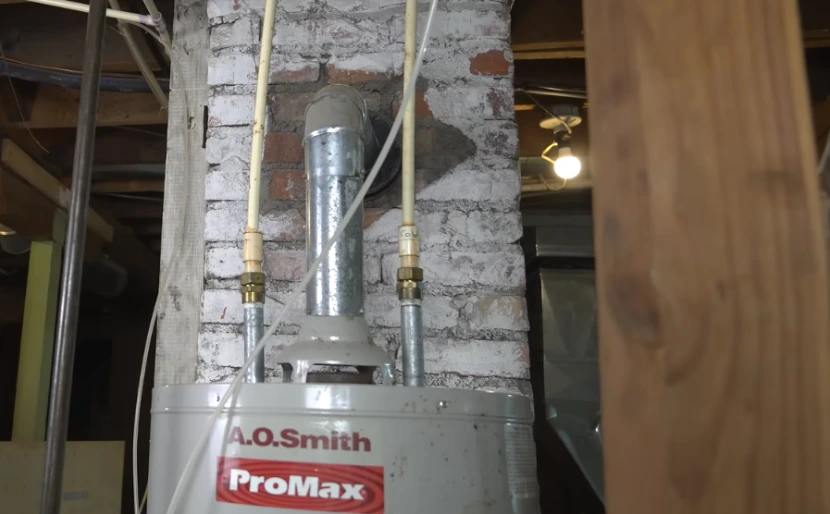
Row home venting geometry. In Philadelphia's attached row homes, exterior walls are limited to front and rear. A direct-vent gas unit — which needs a wall penetration for both intake and exhaust — must terminate on the front or rear wall. Terminating on the front of a row home on a block with architectural review requirements may need coordination with the Philadelphia Historical Commission or local zoning. Rear terminations are almost always the preferred path but depend on where the unit lives in the building relative to the rear wall.
Party walls. Philadelphia row homes share party walls with neighbors. No venting may penetrate a party wall — exhaust terminations must be on an exterior wall of the building proper. This constrains the location options for gas unit installation in interior spaces and is a factor the technician considers when determining where the unit can practically be placed.
Basement headroom and access. Pre-war Philadelphia basements — particularly in South Philly, Fishtown, and Kensington row homes — often have lower ceilings than modern construction. A standard 50-gallon tank standing 58–60 inches tall may require assessment of available vertical clearance and door clearance for delivery. Tankless units, wall-mounted at a comfortable working height, are often more practical in tight Philadelphia basements than tall tank units.
Philadelphia Gas Works coordination. New gas connections or significant upgrades to existing gas service require coordination with PGW. A licensed contractor handles this as part of the installation process, including any required meter or service upgrades. This adds time to the project timeline in some cases — typically one to two weeks for PGW coordination — and is a factor to account for in renovation scheduling.
Permit timeline. Philadelphia's Department of Licenses and Inspections (L&I) processes plumbing permits on a timeline that varies by current workload. For projects on a tight construction schedule, the contractor should pull permits as early in the project as possible, even before the installation date is set. An experienced local contractor will know the current processing times and plan accordingly.
The installation process, step by step
Site Assessment
Location, infrastructure, code requirements evaluated
Unit Selection
Type, size, brand chosen for the specific space and demand
Permit Pulled
Plumbing, gas, and/or electrical permits obtained before work begins
Infrastructure
Water lines, gas or electrical supply, venting established
Install & Test
Unit connected, all systems tested, inspection scheduled
The site assessment is the most important step and often happens as a separate consultation visit before any materials are ordered. The technician walks the installation location, identifies where cold water supply, gas or electrical service, and the venting path will come from, checks for any clearance or access constraints, and confirms the permit requirements for the specific scope of work. From this assessment comes the unit recommendation and a complete scope of what the installation involves.
Once the scope is agreed, the contractor pulls all required permits from Philadelphia L&I before any work begins. For new gas line work, PGW is notified and coordinates the service connection. The installation itself follows the permit approval — infrastructure first (water lines, gas line, electrical circuit, venting rough-in), then unit placement, connection, and commissioning. The installation is tested fully before the technician leaves: confirmed ignition, verified water temperature at every fixture the unit serves, checked all connections under pressure, and T&P valve inspected and tested. Philadelphia's required inspection follows, typically within a few days to two weeks after installation completion.
What drives the cost of a new installation in Philadelphia
New installation costs are more variable than replacement costs because infrastructure scope is highly site-specific. Here are the primary cost factors:
| Factor | Lower Cost Scenario | Higher Cost Scenario |
|---|---|---|
| Infrastructure proximity | Gas, water, and electrical all within 5–10 ft of installation location | Long supply runs required; gas main undersized and needs upgrade |
| Venting complexity | Direct vent through adjacent exterior wall — short run, no elbows | Venting must run through building interior with multiple direction changes; roofline termination required |
| Unit type | Standard conventional tank, gas or electric | High-efficiency condensing tankless with built-in recirculation |
| New construction vs. retrofit | New construction with infrastructure roughed in before walls close | Retrofit into finished space — supply runs require opening walls or ceiling |
| Permit and inspection fees | Single plumbing permit | Plumbing + gas + electrical permits; PGW service upgrade |
| Site access | Open, accessible installation location; no confined space issues | Philadelphia row home with low basement ceiling, narrow stairwell, or difficult unit delivery path |
New installations have a higher likelihood of scope expansion than replacements — situations discovered during the work (undersized gas main, insufficient panel capacity, unexpected wall construction) that require additional trade work. A reputable contractor identifies these during the site assessment and includes them in the quoted scope before work begins, not as add-ons during it. Ask specifically whether the quote includes permit fees, inspection fees, and any known infrastructure upgrades before signing.
Water heater installation — frequently asked questions
What is the difference between installation and replacement?
Replacement swaps an existing unit at the same location using existing connections — a well-defined scope. Installation puts a water heater where none has been before, requiring new water lines, fuel supply, venting, and permits to be established from scratch. See our replacement page if you're swapping an existing unit.
Does a new water heater installation require a permit in Philadelphia?
Yes. A plumbing permit is required for new water heater installations in Philadelphia. Gas line work requires a separate gas permit. New electrical circuits require an electrical permit. A licensed contractor pulls all required permits before work begins and coordinates any required inspections on completion. Never accept a quote that proposes to skip permits on a new installation.
How do I choose between gas and electric for a new installation?
The primary factor is what's practical at the installation site. If existing gas service is nearby with adequate capacity, gas is usually the lower operating cost option. If the gas line would require a long run or significant upgrade, electric — particularly a heat pump water heater — may be more practical. The site assessment covers this evaluation before any fuel type commitment is made.
Can tankless be installed in a Philadelphia row home without major work?
Often yes, but it depends on the specific home and installation location. A direct-vent tankless unit needs a wall penetration for intake and exhaust — this is straightforward when the unit can be mounted near an accessible exterior wall. The gas line may need to be upsized for high-BTU tankless units. The site assessment determines what's needed. In new construction, tankless is usually the cleaner choice because infrastructure can be designed to suit it from the start.
What size water heater do I need for a new installation?
For tank units, sizing is based on the first-hour rating (FHR) matched to your household's peak demand. For tankless units, gallons-per-minute flow rate is matched to simultaneous demand and the temperature rise from incoming cold water. In Philadelphia, incoming cold water temperature in winter is lower than summer, which affects the flow rate a tankless unit can deliver. A technician doing a site assessment sizes the unit correctly for the specific application.
What is an expansion tank and do I need one?
An expansion tank is a small pressurized vessel on the cold water inlet that absorbs the volume increase when water is heated. In a closed plumbing system — one with a backflow preventer or pressure-reducing valve on the main — without an expansion tank, thermal expansion raises pressure inside the water heater. Philadelphia requires expansion tanks on new water heater installations in closed systems, which describes most Philadelphia homes built or replumbed in the past two decades. The technician confirms whether your system needs one during the assessment.
Related water heater services across Philadelphia:
- Water Heater Replacement — swapping an existing unit for a new one at the same location
- Tankless Water Heater Service — repair and maintenance for on-demand units once installed
- Annual Maintenance — schedule the first service visit for a new unit at year one