Water Heater Repair in Philadelphia, PA
Cold shower this morning? Puddle under the tank? Rumbling noise keeping you up? You've found the right place. We connect Philadelphia homeowners and landlords with experienced, local water heater technicians — fast.
Philly HeatWorks is a referral service that connects you with screened local water heater technicians. We do not perform repair work directly.
Philadelphia's water heater problems have specific causes — and specific solutions
Most water heater failures don't happen without warning. The signs build over weeks or months: slower recovery times, a faint sulfur smell, a water bill that quietly climbs. By the time there's a cold shower or a puddle on the basement floor, the problem is already at a critical stage.
Philadelphia homes present their own set of conditions. The city's older housing stock — row homes, twins, and converted apartment buildings across Fishtown, South Philly, Kensington, and beyond — typically have water heaters installed in tight basement utility areas or closets with limited clearance. Many of these units are approaching or past the 12-year mark. Combined with Philadelphia's moderately hard water supply from the Delaware and Schuylkill Rivers, sediment accumulation is a consistent problem that shortens tank life and reduces efficiency.
When you call Philly HeatWorks, you're connected with a technician who already knows these conditions. They arrive with the right parts for the most common Philly-area failures, assess the unit accurately, and give you a straightforward answer: repair it, or replace it. No upselling, no guesswork.
- Tank and tankless units, gas and electric
- All Philadelphia neighborhoods and surrounding areas
- Honest assessment — repair vs. replacement guidance
- Same-day availability for most service requests
Water heater services across Philadelphia
From a pilot light that won't stay lit to a full tankless system overhaul, the technicians in our network cover every type of water heater service Philadelphia homeowners need.
Emergency Water Heater Repair
No hot water, active leaks, or gas odors are urgent. Same-day service is available across Philadelphia for situations that can't wait. Call now and we'll match you with a technician immediately. Don't wait out the cold — learn what to do while you wait.
Emergency ServiceWater Heater Replacement
When repair isn't the right answer, we make replacement straightforward — right unit, right size, properly installed.
Learn MoreTankless Water Heater Repair
On-demand units have different failure modes — heat exchangers, flow sensors, scaling. We handle Navien, Rinnai, Rheem, and more.
Tankless RepairWater Heater Maintenance
Annual sediment flushing, anode rod inspection, and thermostat calibration extend tank life and prevent the failures that always happen at the worst time.
Schedule ServiceWater Heater Installation
New construction, home addition, or upgrading from tank to tankless — proper installation means the unit performs as designed from day one.
Installation InfoWhat is your water heater doing?
Select the symptom that best describes what you're experiencing. We'll tell you what it likely means and what to do next.
Not sure? Just call and describe what's happening — (267) 960-9699 — a technician can often diagnose over the phone.
Understanding water heater problems in Philadelphia
What causes failures, how technicians find them, and what happens from the moment you call to the moment you have hot water again.
Why Philadelphia water heaters fail when they do
A water heater doesn't simply stop working one day without cause. Failures develop along predictable paths, and understanding them helps you recognize the early signs before a repair becomes an emergency — or a manageable repair becomes a forced replacement.
The most common cause of premature failure in Philadelphia is sediment accumulation. Philadelphia's water supply, drawn from the Schuylkill and Delaware Rivers, carries dissolved minerals — primarily calcium and magnesium — that precipitate out of solution when water is heated. Over years of use, this mineral sediment settles at the bottom of the tank. It acts as an insulating layer between the burner (or lower heating element) and the water, forcing the unit to work harder and run longer to reach the set temperature. The telltale rumbling or popping sound is the noise of water heating under that sediment layer — a sign that buildup is already significant.
The second major failure path involves the anode rod. Every tank-style water heater contains a long metal rod — typically magnesium or aluminum — that sacrifices itself to corrosion to protect the steel tank walls. When this rod depletes (usually after 4–6 years, faster in areas with harder water), the tank itself begins to corrode from the inside. Once corrosion reaches the steel, the clock is running. A technician who inspects and replaces the anode rod on a regular schedule can add years to a tank's functional life.
For gas water heaters, the thermocouple is the most frequently replaced component after anode rods. This small safety device sits in the pilot flame and generates a small electrical current that holds the gas valve open. When the thermocouple wears out — typically after 8–10 years — it sends no signal to the valve, the gas shuts off, and the pilot won't stay lit. This is a straightforward repair that restores full function in under an hour.
Electric water heaters have their own wear pattern. Dual-element units have an upper and lower heating element; the lower element handles the bulk of the heating work and almost always fails first. When it does, the upper element keeps the top portion of the tank hot but cannot maintain temperature for the full volume. The result is a tank that seems to run out of hot water unusually fast — often mistaken for a capacity problem when it's actually a component failure.
Do not attempt to relight the pilot. Do not operate any light switches. Open a window, leave the building, and call your gas utility — PGW (Philadelphia Gas Works) at 215-235-1212 — from outside or from a neighbor's home. Call for water heater service only after the gas utility has cleared the building.
How a water heater technician diagnoses the problem
A skilled technician doesn't guess. When they arrive at your Philadelphia home, they follow a systematic process that confirms the failure before any part is ordered or work begins. Here's what that typically looks like:
First, they'll ask about symptoms — when the problem started, whether it's intermittent or constant, what the hot water recovery time is like, and whether you've noticed any changes in water color or odor. This narrows the likely causes before they even open the access panel.
For a gas unit, they'll check the pilot light and thermocouple condition, test the gas valve operation, inspect the flue for blockages or backdrafting, and check the thermostat setting. For an electric unit, they'll use a multimeter to test each heating element for continuity and proper resistance, check the thermostat settings (upper and lower), inspect the high-limit reset switch, and verify the circuit breaker amperage matches the unit's requirements.
Regardless of fuel type, they'll check the pressure relief valve, inspect the condition of the anode rod if access allows, and look for signs of tank corrosion — both internal (rust in the water supply) and external (rust streaks or moisture at seams). They'll also check the temperature and pressure (T&P) discharge pipe to ensure it terminates correctly per code — a detail often missed in older Philadelphia installations.
Locate the model and serial number on the rating plate (usually a sticker on the side of the tank). The serial number often encodes the manufacture date — a key factor in the repair vs. replace decision. Most manufacturers use the first four digits of the serial to indicate week and year.
What happens after the diagnosis
Once the technician has a clear picture, they'll explain the findings plainly and give you options. A straightforward component replacement — thermocouple, heating element, thermostat, pressure relief valve — can typically be completed in one visit. The technician will have common replacement parts on the truck for the most frequently serviced units.
If the issue is more involved — a failed heat exchanger on a tankless unit, significant internal corrosion, a tank that's past its viable lifespan — they'll explain the options for water heater replacement and give you a realistic picture of what the replacement process involves, including access requirements for row home basements, permit considerations, and timing.
After any repair or replacement, a good technician will test the unit fully: confirm the burner cycles on and off correctly, verify hot water reaches the proper temperature at the tap, check all connections for leaks, and confirm the pressure relief valve operates as expected. You should leave the appointment with a written summary of what was done and what was found — keep this for future reference.
From your call to hot water
A clear, four-step process with no surprises.
You Call
Describe your situation to our referral line at (267) 960-9699. We listen, ask a few questions, and assess urgency.
We Match
We connect you with a screened, qualified water heater technician available in your Philadelphia neighborhood.
Tech Arrives
The technician comes to your home, diagnoses the problem accurately, and explains the repair or replacement options clearly.
Problem Solved
Most repairs are completed same-visit. You get hot water back and a clear record of what was done.
Referral disclosure: Philly HeatWorks is a referral service. When you call, your request is passed to a qualified, independent water heater service provider in the Philadelphia area. We do not perform repair or installation work ourselves. Provider credentials are verified before inclusion in our network.
What deferred repair actually costs you
A water heater problem that could have been fixed for a component replacement fee has a way of escalating when ignored. Here's the typical progression:
- Sediment buildup reduces efficiency and forces the unit to run longer, raising your gas or electric bill monthly
- A depleted anode rod that's missed at year 5–6 allows tank wall corrosion to advance; by year 10 the tank is often beyond saving with a simple anode swap
- An unnoticed slow tank leak — often first appearing as moisture on the concrete beneath the unit — can cause significant water damage to a finished basement before it becomes an obvious puddle
- A failure that happens in winter, on a weekend, or during a holiday period often results in emergency service fees that significantly exceed the cost of a scheduled repair visit
The most cost-effective path is simple: have the unit assessed when you first notice a symptom, and schedule annual maintenance once the unit reaches year 5. Catch problems early, when they're still component-level issues rather than whole-unit failures.
What affects the cost of water heater service in Philadelphia
Costs vary based on several factors specific to each job. Here's what technicians typically consider when assessing a service visit:
| Factor | Lower End | Higher End | Why It Matters |
|---|---|---|---|
| Unit type | Standard tank (gas/electric) | Tankless condensing | Tankless units have more complex components and often require specialized parts |
| Repair vs. replace | Single component (thermocouple, element) | Full unit replacement with permit | Component repairs are typically completed in one visit; replacements involve removal, disposal, and installation |
| Unit age | Under 10 years, repair is usually viable | 12+ years, replacement often recommended | Repairing a unit near end-of-life often doesn't make economic sense |
| Access | Open basement, good clearance | Tight closet, confined space, multi-floor row home | Philadelphia row homes vary significantly in basement access — affects labor time |
| Timing | Scheduled weekday visit | Evening, weekend, or emergency same-day | Emergency and after-hours calls typically carry a premium service rate |
Neighborhoods we serve across Philadelphia
Our network of technicians covers Philadelphia's diverse housing stock — from Fishtown's 19th-century row homes to Northeast Philly's postwar ranches.
Fishtown
Dense 1880s–1920s row-home stock with aging tank units. High demand for both repair and tankless upgrades as the neighborhood renovates.
Water Heater Repair in FishtownNortheast Philadelphia
Philadelphia's largest residential area. Postwar twins and ranches with original 40-gallon gas units. Sediment buildup from Delaware watershed water is common.
Water Heater Repair in Northeast PhillySouth Philadelphia
Tight row-home density with basement units prone to drainage backup issues. Strong demand for emergency and replacement service year-round.
Water Heater Repair in South PhillyKensington
High renter density means landlords managing aging units across multiple properties. Fast turnaround and straightforward pricing are priorities here.
Water Heater Repair in KensingtonNorthern Liberties
Mix of converted lofts and new construction, with high tankless adoption. Homeowners here typically research before calling — and want specific answers.
Water Heater Repair in Northern LibertiesOther Philadelphia Areas
We also connect homeowners in Germantown, Roxborough, Manayunk, Chestnut Hill, and surrounding Philadelphia County areas. Call to confirm coverage.
Call to Check CoverageWhat to have ready
Unit age & model
Check the rating plate sticker on the tank side. Serial number typically encodes the manufacture date. Share this when you call.
Fuel type
Gas, electric, or propane. If you're unsure: look for a gas line entering the unit from below, or two electrical wires if it's electric.
Access to the unit
Clear the area around the water heater before the technician arrives. Note any tight doorways or stairs on the way to the basement.
Supply shutoff location
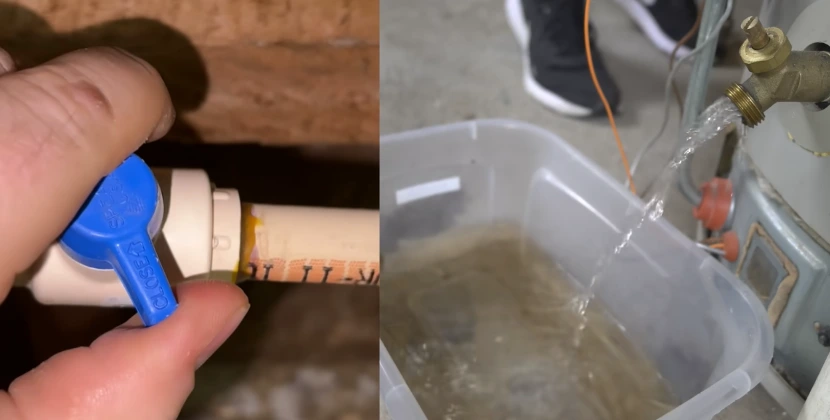
Know where your cold water supply shutoff is — the valve above or behind the unit. If you have an active leak, turn it off before the tech arrives.
No hot water in Philadelphia?
Call right now.
Same-day service available across the city. Describe your problem, get matched with a qualified local technician, and have your water heater back in service — today.
(267) 960-9699Philadelphia water heater repair — FAQ
How quickly can I get a water heater repaired in Philadelphia?
Same-day and next-day appointments are typically available throughout Philadelphia. For emergency situations — active leaks, no hot water, or gas odors — call immediately at (267) 960-9699. We match you with the nearest available technician for urgent calls.
How do I know if my water heater needs repair or full replacement?
Units under 10 years old with a single failed component — thermostat, heating element, anode rod, thermocouple — are almost always worth repairing. Units 12–15+ years old with corrosion, significant leaks, or recurring failures are usually better candidates for replacement. A technician can assess on-site and give you an honest recommendation.
What causes a water heater to stop producing hot water?
The most common causes are a failed heating element (electric units), an extinguished pilot light or faulty thermocouple (gas units), a tripped high-limit switch, or a heavily sediment-coated tank bottom that prevents efficient heat transfer. Each has a distinct repair path — the technician's diagnosis narrows it down before any parts are ordered.
Is a rumbling water heater dangerous?
Rumbling and popping sounds are caused by water heating under a sediment layer at the tank bottom — annoying and inefficient, but not immediately dangerous. Left unaddressed, sediment accelerates tank corrosion and eventual failure. A professional sediment flush resolves it in most cases and extends the tank's useful life.
What should I do if my water heater is leaking?
Turn off the cold water supply valve above or behind the unit first. For gas heaters, move the thermostat dial to the "Pilot" setting. Then call for service at (267) 960-9699. A leak from the pressure relief valve may be normal operation or may indicate a faulty valve. A leak from the tank base almost always means the tank is failing internally — replacement is typically the right call.
Does Philadelphia's water affect water heater lifespan?
Philadelphia draws from the Schuylkill and Delaware Rivers. The water is moderately hard in certain parts of the city, which means mineral scale accumulates inside tank heaters and on the heat exchanger of tankless units over time. Annual maintenance — particularly sediment flushing — helps protect your investment and keeps the unit running efficiently.
Can I get a tankless water heater installed in a Philadelphia row home?
Yes — tankless units are increasingly common in Philadelphia row homes. The main considerations are gas line capacity (many require a larger line than existing tanks), proper venting through an exterior wall or roofline, and electrical requirements for ignition. These are assessed during an on-site consultation before any installation work begins.
How long does a typical water heater repair take?
Most component repairs — thermostat replacement, heating element swap, pilot assembly service, anode rod replacement — are completed in one to two hours. Full unit replacements typically take two to four hours, depending on access, existing connections, and whether venting modifications are needed for the new unit.
What is the referral arrangement on this site?
Philly HeatWorks connects you with screened, local water heater service providers in the Philadelphia area. When you call, your request is matched to a qualified technician. We do not perform the work directly. Provider credentials are verified before inclusion in our network.
What should I have ready before the technician arrives?
Locate your water heater's age and model number (usually on the rating plate on the side of the unit). Note whether it's gas or electric. Clear the area around the unit, and if you have an active leak, turn off the cold water supply valve above the tank before they arrive.
Service Photos